






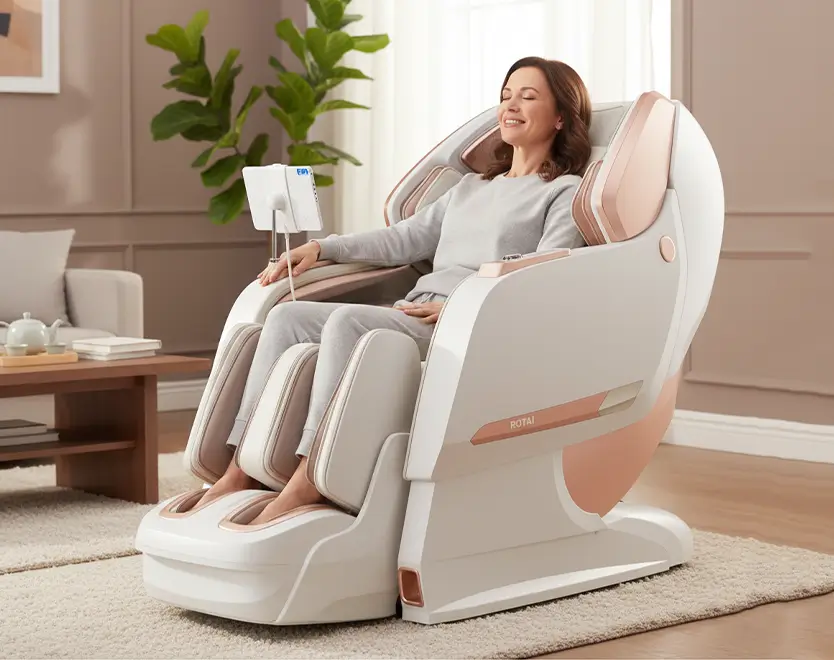
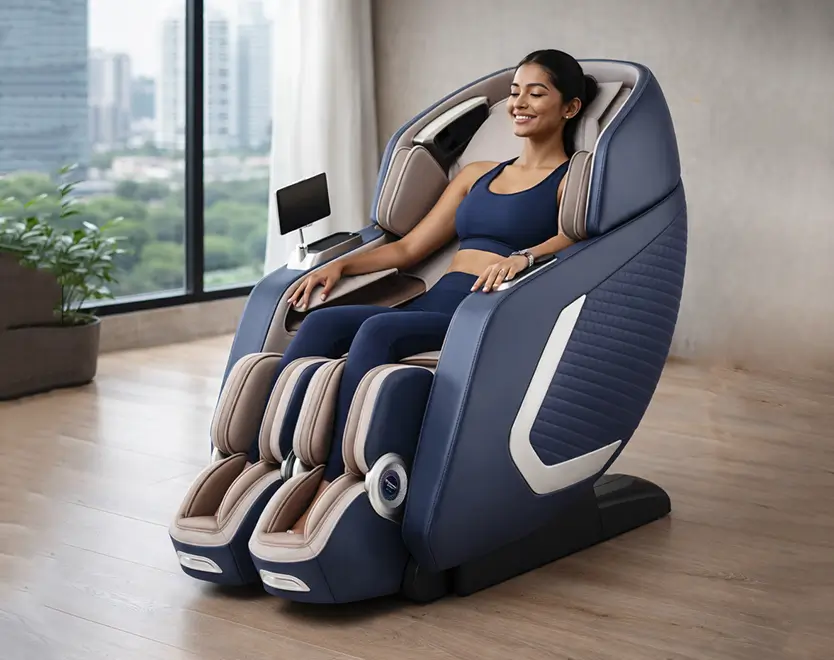
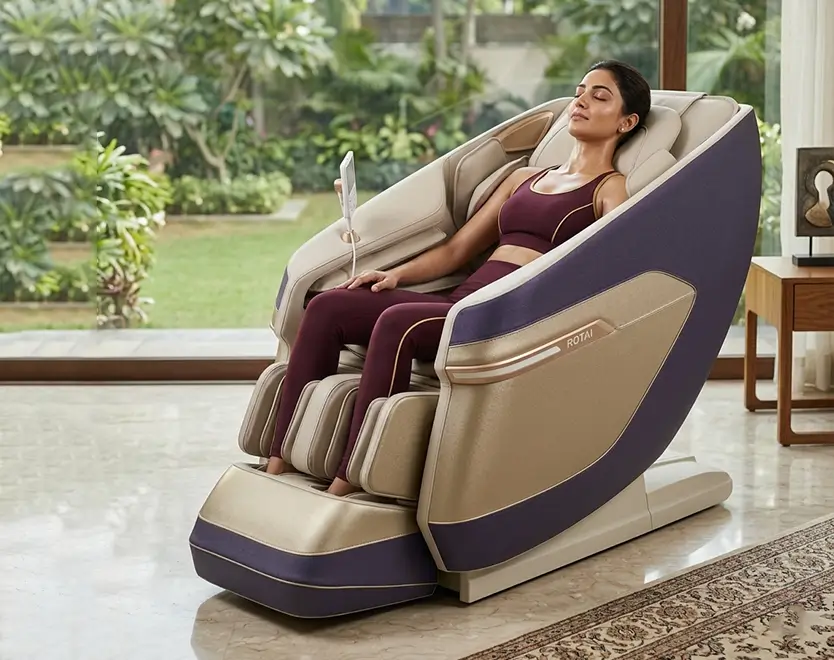

If your day looks like 8+ hours in front of a screen, a stiff neck and an aching lower back probably feel “normal” by now. They shouldn’t be. Desk jobs quietly reshape posture, rounded shoulders, a forward-tilted head, and a lower back that’s locked in one position for hours at a stretch. Over months and years, this adds up to chronic pain, poor circulation, and constant fatigue.
This is exactly why the massage chair has moved from a luxury item to a practical wellness tool for working professionals. It’s no longer just something you find in a spa or an airport lounge; it’s becoming a fixture in home offices and living rooms across India. In this blog, we’ll break down why desk workers need a massage chair, what to look for before buying one, and why HCI massage chairs are leading the category.
Why 9-to-5 Jobs Wreck Your Posture
Desk work isn’t physically demanding in the traditional sense, but it’s demanding in a different way; it asks your body to stay static for long, uninterrupted stretches. A few things happen as a result:
- Forward head posture: Constantly looking at a screen pulls the head forward, straining the neck and upper back.
- Rounded shoulders: Typing all day tightens the chest muscles and weakens the upper back, pulling shoulders inward.
- Compressed spine: Sitting for hours puts continuous pressure on spinal discs, especially in the lower back.
- Poor circulation: Limited movement slows blood flow to the legs and lower body, leading to stiffness and swelling.
- Tension headaches: Neck and shoulder tightness often radiates upward, causing recurring headaches by the end of the day.
None of this fixes itself overnight, and standing desks or occasional stretching only go so far. What the body actually needs is consistent, targeted relief, which is where a massage chair earns its place in a daily routine.
How a Massage Chair Helps Fix Desk Posture
A good massage chair isn’t just about relaxation; it’s a genuine recovery tool for the specific problems desk jobs create.
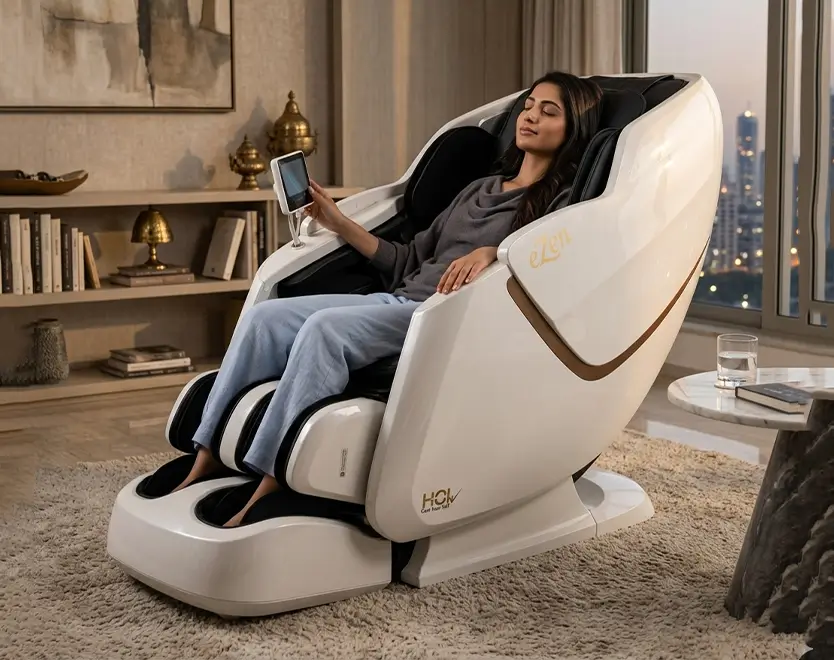
- Spinal decompression through zero-gravity positioning Most modern chairs, including HCI’s range, offer a zero-gravity recline that lifts your legs to heart level and evenly distributes body weight. This takes pressure off the spine, the same spine that’s been compressed all day in an office chair.
- Targeted neck and shoulder therapy Rollers and airbags in the upper back and shoulder area work directly on the tight muscles caused by hunching over a keyboard, releasing knots that build up from repetitive posture.
- Lower back support and realignment Advanced roller tracks follow the natural curve of the spine, which helps counteract the slouched position most people fall into after a few hours at a desk.
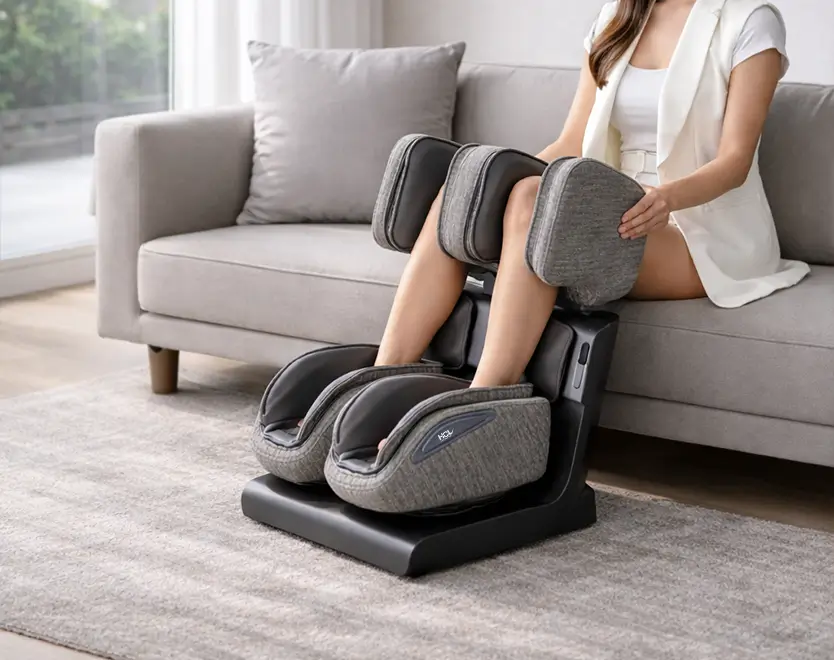
- Improved circulation Air compression in the calves, thighs, and feet, a feature every full-body massage chair typically includes, helps push blood back up from the legs, reducing the heaviness and swelling that comes from sitting all day.
- Stress and mental fatigue relief Desk work isn’t just physical strain; it’s mental too. Heat therapy and rhythmic massage combined lower cortisol levels, helping you decompress after back-to-back meetings or deadline pressure.
Used for even 15-20 minutes a day, a massage chair can meaningfully offset the physical toll of a sedentary job, rather than just masking the discomfort temporarily.
What to Look for in a Massage Chair for Desk Workers
Not every massage chair is built with office-related pain in mind. If posture correction and daily recovery are your primary goals, prioritize these features:
- Zero-gravity recline — essential for spinal decompression after sitting all day.
- 3D or 4D roller technology – allows rollers to move deeper and adjust to your body’s contours, rather than following a fixed path.
- Full-body coverage – neck, shoulders, back, lumbar, hips, and legs should all be addressed, not just the back.
- Body scanning technology – automatically maps your shoulder height and spine curve for a customized massage.
- Heat therapy – particularly useful for stiff lower backs and tight shoulders.
- Compact footprint – if it’s going into a home office, space-saving designs matter.
- Adjustable intensity – desk workers dealing with chronic tension need stronger settings than someone using it occasionally for relaxation.
Massage Chair Price in India: What to Expect
One of the first questions most buyers have is around massage chair prices in India, and the honest answer is it varies quite a bit depending on the technology inside.
- Entry-level massage chairs typically offer basic back and seat massage with fewer automated programs. These are a reasonable starting point for occasional use.
- Mid-range full-body massage chairs: Come with 3D or 4D rollers, zero-gravity positions, and air compression for the legs, ideal for people using them daily to manage desk-related pain.
- Premium massage chairs: Include advanced body scanning, 4D/5D roller mechanisms, multiple auto-programs, and near spa-level therapy at home.
Because pricing spans such a wide range, it’s worth thinking about frequency of use before deciding. If you’re planning to use it daily after work, which is genuinely the most effective way to manage desk-job posture problems, investing in a full-body massage chair with proper lumbar and neck coverage tends to pay off far more than a basic model.
Why HCI Massage Chairs Stand Out for Home Use
If you’re specifically looking for a massage chair for home, HCI has built a strong reputation as one of the most reliable options in the Indian market, and there are a few clear reasons why.
HCI’s full-body massage chairs are engineered with 3D, 4D, and even 5D roller technology, which allows the rollers to move not just up and down the spine but also adjust depth, width, and intensity, closely mimicking the feel of a hands-on massage rather than a mechanical one. This matters a lot for desk workers, since posture-related tension tends to sit in very specific spots (base of the neck, between the shoulder blades, and lower lumbar), and generic massage patterns often miss them.
Their chairs also combine zero-gravity recline, air compression, and heat therapy in the same session, addressing spinal pressure. circulation, and muscle stiffness together instead of one at a time. HCI’s SL and HSL roller tracks are designed to follow the natural curve of the spine more accurately, which is particularly useful for people whose posture has already shifted due to years of desk work.
Beyond the technology, HCI massage chairs are backed by ISO 13485:2016, CE, and RoHS certifications, which speaks to build quality and safety standards, an important factor when you’re bringing a large piece of wellness equipment into your home. HCI also offers home demo services in several cities, so buyers can actually try a chair’s massage patterns and pressure before committing, which is genuinely rare in this category. With options ranging from compact home models to premium 5D chairs, HCI covers a wide spread of needs and budgets, making it easier to find something that fits both your posture requirements and your space.
For desk workers specifically, this combination of targeted roller technology, full-body coverage, certified build quality, and the ability to test before buying is what sets HCI apart from many other massage chair brands in India.
Building a Simple At-Home Recovery Routine
A massage chair works best as part of a routine, not a one-off fix. A simple approach that works well for most desk workers:
- Morning (optional, 5-10 minutes): A quick session focused on the neck and shoulders to loosen stiffness before starting work.
- Post-work (15-20 minutes): The main session, full-body or back-and-lumbar focused, using zero gravity mode to decompress the spine after a full day of sitting.
- 2-3 times a week: Add a leg and foot-focused session to counter circulation issues from prolonged sitting.
Consistency matters more than duration here. A short daily session tends to do more for posture correction than an occasional long one.
FAQs
- Can a massage chair actually fix bad posture from desk work? A massage chair won’t correct posture on its own, but it directly addresses the muscle tightness and spinal compression that cause poor posture in the first place. Combined with regular use, ergonomic seating at your desk, and basic stretching, it becomes a strong recovery tool.
- How long should I use a massage chair each day if I have a desk job? 15-20 minutes a day is generally enough for most people. Desk workers dealing with chronic neck or back tightness may benefit from a slightly longer session, but overuse isn’t necessary for results.
- Is a full body massage chair better than a chair that only targets the back? For desk workers, yes. Posture issues from sitting affect the neck, shoulders, lower back, hips, and even legs due to poor circulation. A full body massage chair addresses all of these areas rather than just one.
- What is a reasonable massage chair price in India for daily home use? It depends on features, but mid-range full-body massage chairs with 3D/4D rollers and zero-gravity recline typically offer the best balance of price and functionality for people planning to use them daily.
- Are HCI massage chairs suitable for small home offices? Yes. HCI offers compact full-body massage chair models designed for smaller spaces, alongside premium options for those with more room, so sizing isn’t usually a limiting factor.
- Do I need a massage chair with heat therapy for back pain from sitting? Heat therapy isn’t mandatory, but it does help relax tight muscles faster, especially in the lower back and shoulders, two areas most affected by prolonged sitting.
- How often should I service or maintain a massage chair at home? Routine care is minimal; wiping down the upholstery and keeping it away from direct sunlight or moisture is usually enough. Brands like HCI also offer warranty and service support, which is worth checking before purchase.
Final thoughts
Desk jobs aren’t going away, but the physical toll they take doesn’t have to be permanent. A well-chosen massage chair, particularly a full-body massage chair with zero-gravity recline and multidimensional roller technology, can meaningfully reduce the neck, shoulder, and back issues that come with sitting all day. With certified build quality, home demo options, and a wide range of models, HCI makes it easier to find a massage chair for home that actually fits your posture needs and your budget.